WELCOME TO THE CARDIAC COHERENCE ONLINE COURSE

COURSE CONTENT
MODULE 1 – THE AUTONOMIC NERVOUS SYSTEM
Lesson 1: Sympathetic & Parasympathetic Nervous Systems
Lesson 2: Automatic Survival Responses
Lesson 3: Autonomic Imbalance
MODULE 2 - CARDIAC COHERENCE THEORY
Lesson 1: Introduction
Lesson 2: How Do We Activate the "Brake Pedal"?
Lesson 3: Consistent Practice Is the Key to Success!
Lesson 4: Benefits of Brake Pedal Training
Lesson 5: Both Restorative and Preventive
Lesson 6: Restoring Autonomic Balance
MODULE 3 - CARDIAC COHERENCE IN PRACTICE
Lesson 1: Minimum Practice Time
Lesson 2: Breathing Rhythm
Lesson 3: Using a Breathing Pacer App
Lesson 4: Important Tips
Lesson 5: Research Findings
Lesson 6: Daily Practice Leads to Lasting Success!
MODULE 1 – THE AUTONOMIC NERVOUS SYSTEM
Lesson 1: The Sympathetic and Parasympathetic Nervous Systems
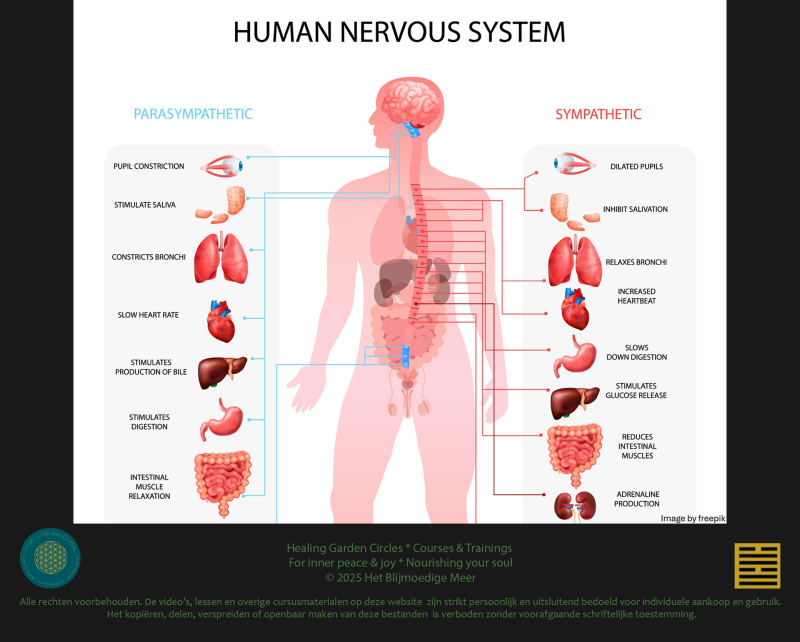
In this first module, you'll learn how the autonomic nervous system works, the roles of the sympathetic and parasympathetic nervous systems, and how stress and trauma can throw your nervous system out of balance.
"Autonomic" means automatic. Your autonomic nervous system controls many essential functions without you having to think about them, including your heart rate, breathing, body temperature, blood pressure, digestion, hormone regulation, and sleep-wake cycle.
The autonomic nervous system consists of two branches that have opposite functions: the sympathetic nervous system and the parasympathetic nervous system. The sympathetic nervous system—also known as the accelerator of your nervous system—prepares your body for action and survival. The parasympathetic nervous system—your brake—is often referred to as the "rest and digest" system. It supports relaxation, recovery, and healing.
When your nervous system is functioning well, these two branches work together in balance. As one becomes more active, it naturally reduces the activity of the other, helping your autonomic nervous system stay balanced.
You can think of the accelerator as your body's stress gauge. For example, if you've ever felt nervous before an exam, your accelerator becames more active. When you're under significant stress, it becomes much harder to relax, eat, or sleep. Once the exam is over, however, your accelerator can settle down, allowing your brake to become more active again, making it easier to relax, eat, and sleep.
Lesson 2: Automatic Survival Responses
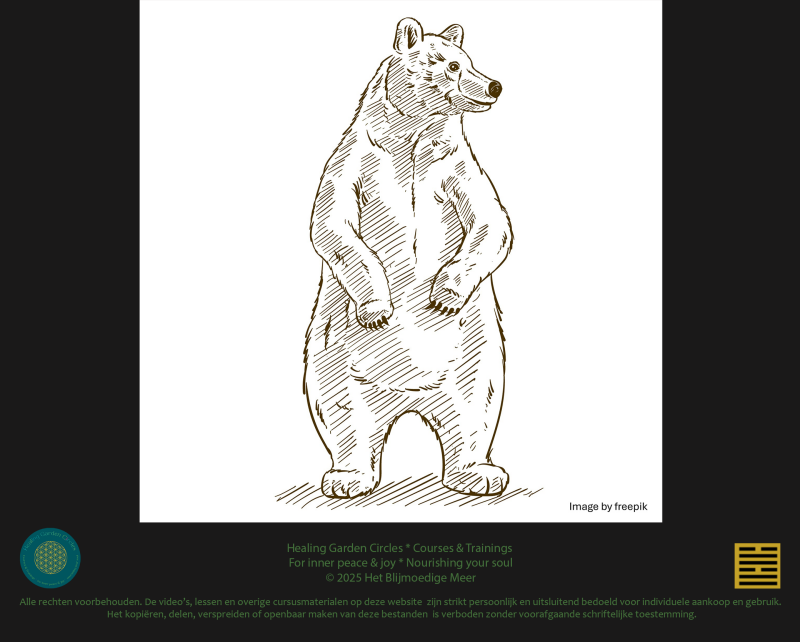
The autonomic nervous system has been around for millions of years.
Back in prehistoric times, what happened if we suddenly came face to face with a bear?
Our accelerator would immediately kick in because its job is to help us survive, and the amygdala would sound the alarm. The amygdala is the brain's smoke detector, constantly scanning our surroundings for danger.
When the amygdala detects a threat, one of the first things it does is temporarily shut down the neocortex—our "thinking brain," which developed much later in human evolution. By doing this, the amygdala increases our chances of survival. Imagine standing face to face with a bear and stopping to carefully analyze the situation and decide on the best strategy. By the time you've finished thinking, it could be too late. Your body needs to react automatically.
This is also why, in modern life—where the chances of running into a bear are extremely small—we often find it difficult to think clearly when we're under stress. In those moments, the amygdala temporarily overrides our thinking brain so our body can respond as quickly as possible.
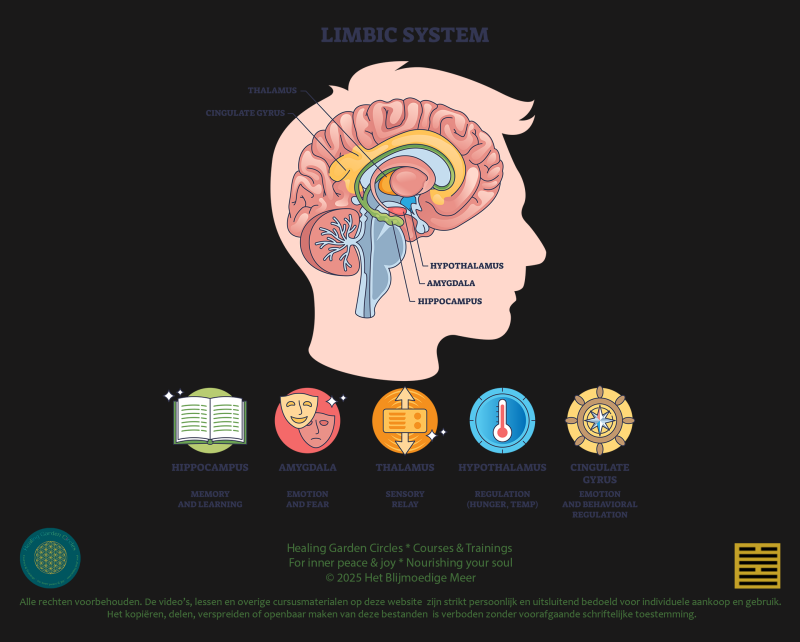
All of this happens incredibly fast. In a fraction of a second, the amygdala temporarily shuts down the neocortex—our thinking brain.
At the same time, stress hormones such as adrenaline, noradrenaline, and cortisol are released. These hormones trigger what we now call stress symptoms, such as a faster heart rate. While we think of these as stress symptoms today, from an evolutionary perspective they were originally life-saving responses.
Your body takes in more oxygen, and blood is redirected away from organs such as the digestive system and toward the muscles in your arms and legs. This prepares you to be physically stronger and better able to fight or escape—a response known as the fight-or-flight response.
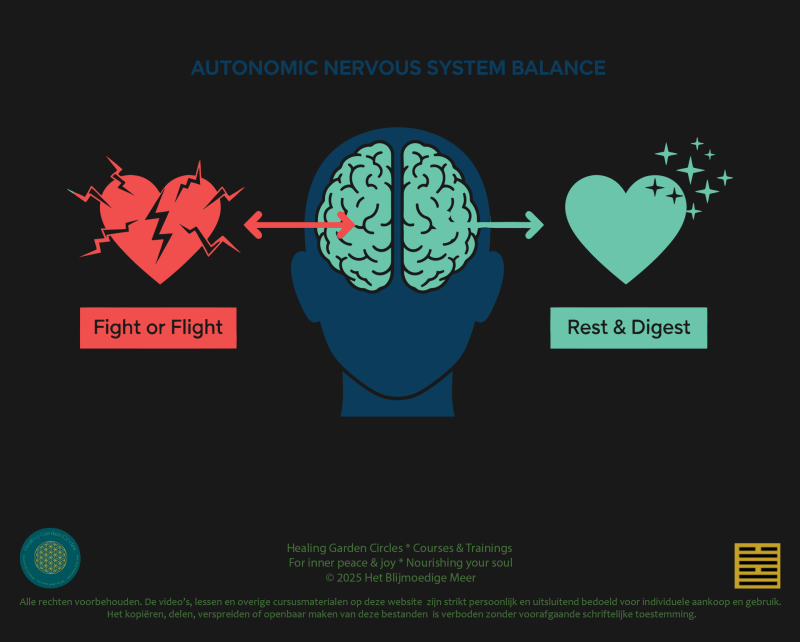
As soon as the bear is gone and the danger has passed, the accelerator can settle down, allowing the brake of the autonomic nervous system to take over.
At that point, your body can relax, recover, eat, and sleep again. The energy that was used during the fight-or-flight response is restored, allowing your body to recover and helping your autonomic nervous system return to balance.
Lesson 3: Autonomic Imbalance
If we aren't able to fight or flee, that survival energy isn't used up. Instead, it remains trapped in the autonomic nervous system. As a result, the accelerator can't fully settle down, and the nervous system stays in a state of alertness and readiness. The amygdala remains on high alert, constantly scanning for danger—whether we're aware of it or not.
When the accelerator remains overly active—in other words, when there's too much accelerator activity and not enough brake activity—the autonomic nervous system becomes unbalanced. This is known as autonomic imbalance.
Autonomic imbalance can result from a single traumatic event in which we were unable to fight or flee, leaving that survival energy trapped in the nervous system. It can also develop from prolonged, chronic, or accumulated stress, when the accelerator has been pressed for too long without enough brake activity to allow the body to recover. This is often what happens in cases of burnout.
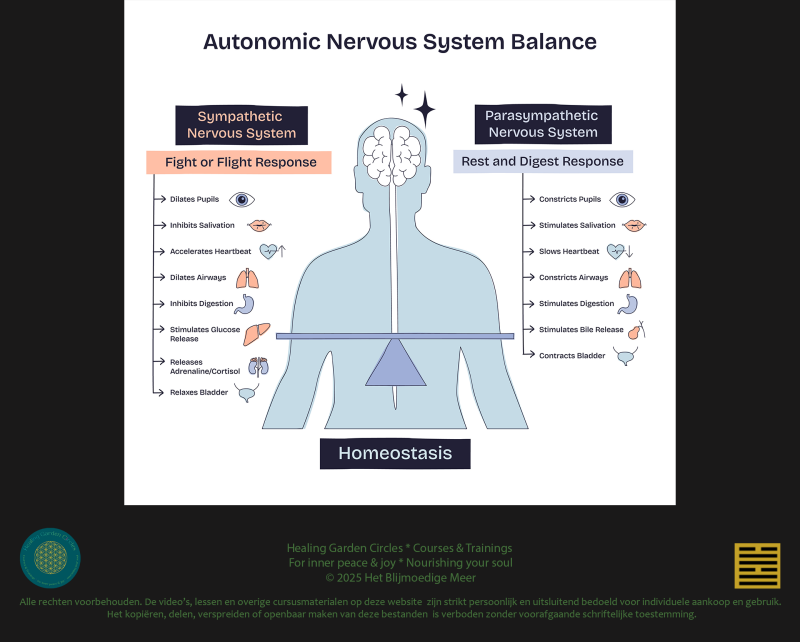
Common symptoms of excessive accelerator activity include a faster heart rate, higher blood pressure, rapid breathing, dilated pupils, sweating, slowed digestion, feeling overwhelmed by emotions, anxiety or panic attacks, excessive worrying, difficulty falling or staying asleep, and digestive problems. In fact, any organ or system regulated by the autonomic nervous system can become dysregulated.
When the accelerator is dominant, we're much more likely to become triggered than when the brake is in charge. Being triggered means we automatically react to a trigger—usually something that touches on an old emotional wound. When this happens, the amygdala automatically shifts us into a survival response, such as fight, flight, or freeze. People-pleasing can also be an automatic survival response. In this context, people-pleasing is a combination of fighting and fleeing in an attempt to stay safe.
Only after the amygdala stops overriding our thinking brain do we fully realize how we reacted—often only in hindsight. Sometimes that automatic response was appropriate and helpful. Other times, it may seem out of proportion to the situation and ultimately not very helpful.
KNOWLEDGE QUIZ MODULE 1 - THE AUTONOMIC NERVOUS SYSTEM
MODULE 2 - CARDIAC COHERENCE THEORY
Lesson 1 - introduction

In this second module, you'll learn how Cardiac Coherence breathing exercises can help restore balance in the autonomic nervous system.
These breathing exercises activate the brake of the autonomic nervous system. When practiced consistently every day, they can reduce the effects of stress and help improve stress-related conditions.
As you've already learned, prolonged or accumulated stress can cause the autonomic nervous system to become unbalanced. By restoring that balance through these breathing exercises, stress symptoms begin to decrease, and you're less likely to become triggered.
Being triggered means automatically reacting to a trigger—usually something that touches on an old emotional wound. When this happens, the amygdala automatically shifts us into a survival response such as fight, flight, or freeze. People-pleasing can also be an automatic survival response.
As you practice Cardiac Coherence regularly, you'll become much less likely to be triggered. And if you are triggered—which can still happen because we're human, not robots—your body's stress response will settle down more quickly and easily. That's because your nervous system gradually adapts to having more brake activity than accelerator activity.
In other words, these exercises can help the brake become more active than the accelerator, creating a healthy shift that restores balance to the autonomic nervous system.
Lesson 2 - How Do We Activate the "Brake Pedal"?
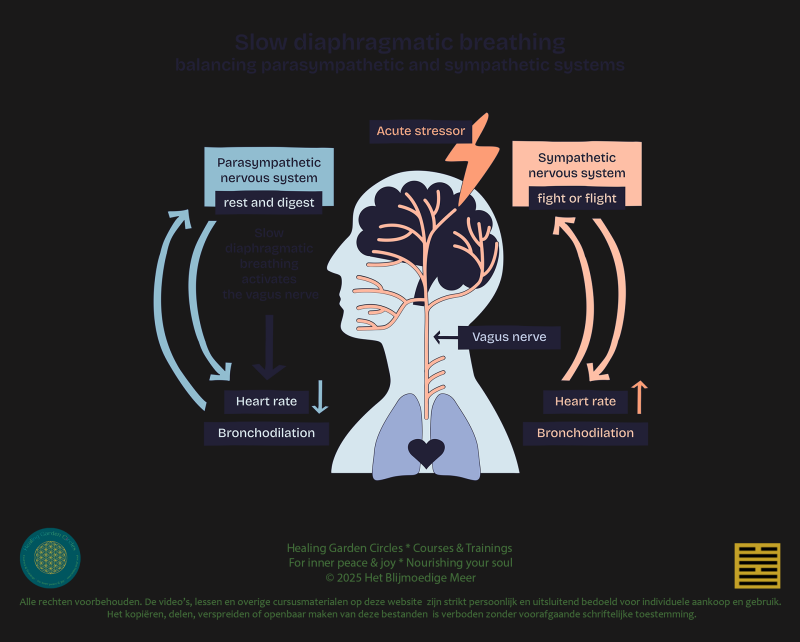
First, these breathing exercises work because the exhale lasts at least one and a half times longer than the inhale. It is a biological fact that your heart rate naturally speeds up slightly every time you inhale and slows down slightly every time you exhale. With every breath, your heart rate speeds up a little, then slows down a little, over and over again.
Your breathing is the only function of the autonomic nervous system that you can consciously control. For example, you can't tell your digestive system to finish digesting your meal by a certain time, and you can't simply command yourself to fall asleep at a specific hour. You can, however, intentionally spend a few minutes breathing with an exhale that is at least one and a half times longer than your inhale. As a result, your heart rate slows down because your heart naturally follows your breathing. That's simply how our biology works.
As your heart rate slows down, your brain receives the message that the danger has passed. Think back to the example of the bear from prehistoric times in the previous module about the autonomic nervous system. Your brain receives the signal: "The danger is over. The bear is gone. The accelerator can settle down, and the brake can take over."
Second, when your breathing rate is between four and seven breaths per minute—with one breath consisting of one inhale and one exhale—you enter the balance zone of the autonomic nervous system. For example, if you inhale for 4 seconds and exhale for 6 seconds (with the exhale being exactly one and a half times longer than the inhale), each complete breath takes 10 seconds. That equals 6 breaths per minute, which falls perfectly within the 4-to-7-breaths-per-minute range of the autonomic nervous system's balance zone.
Lesson 3 - Benefits of Brake Pedal Training
The Cardiac Coherence breathing exercises are simple to learn and don't take much time. However, they won't change the state of your autonomic nervous system if you only practice them occasionally or only during times of high stress.
Even though a single session can activate your brake within about a minute, the accelerator will still be too dominant afterward, while the brake remains too weak. As a result, the imbalance in your autonomic nervous system persists, and little changes over the long term.
Our goal is to lower the body's stress gauge by reducing accelerator activity while increasing brake activity—ultimately reaching a point where brake activity is greater than accelerator activity. Achieving this requires consistent daily practice.
This is a marathon, not a sprint. Consistency is the key to success.
With regular daily practice over several weeks, accelerator activity gradually decreases while brake activity increases, allowing your nervous system to return to a healthier state of balance.
Lesson 4 - Consistent Practice Is the Key to Success!
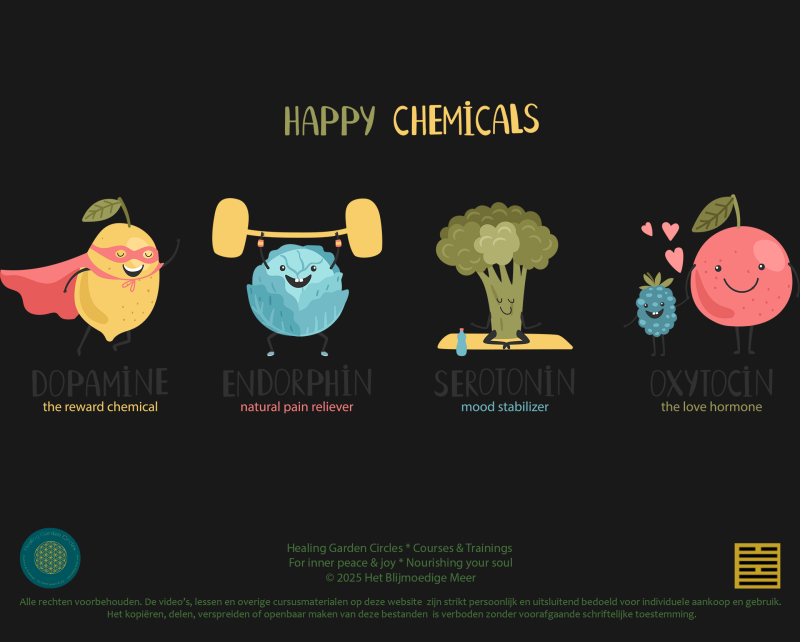
As accelerator activity decreases and brake activity increases, your body begins to function very differently. The production and release of stress hormones—such as adrenaline, noradrenaline, and cortisol—decrease, while the production and release of feel-good hormones—including oxytocin, dopamine, and serotonin—increase.
Oxytocin, often called the "bonding hormone," helps us feel safer and more connected in social situations. Dopamine and serotonin are natural mood-enhancing neurotransmitters that play an important role in emotional well-being.
This creates a very different experience. When the accelerator is dominant, your body produces and releases more stress hormones. When the brake is dominant, it produces and releases more feel-good hormones, helping you feel calmer, safer, and more emotionally balanced.

When the accelerator is dominant, the amygdala—the brain's smoke detector—remains hypervigilant, constantly scanning for signs of danger.
When the brake is dominant, the ventral branch of the vagus nerve (the tenth cranial nerve) uses mirror neurons to scan for signals of safety. In fact, it's only when the ventral branch of the vagus nerve is active that we can truly feel safe and deeply relaxed.
If you'd like to learn more about this, you can explore it in the online Polyvagal Training course.
Lesson 5 - Both Restorative and Preventive

These exercises can both restore balance to the autonomic nervous system and help prevent anxiety, panic attacks, and a wide range of stress-related symptoms and conditions, such as burnout, when practiced consistently.
The benefits are noticeable on physiological, physical, mental, emotional, and social levels. Everything is connected.
For example, imagine that someone you don't know looks at you for a while. If your accelerator is dominant, you're more likely to think, "What does that person want from me?" You may start to feel uneasy or anxious and want to withdraw or leave the situation. If your brake is dominant, however, you might instead think, "Maybe that person wants to ask me something." You'll be more likely to remain calm, feel safe, and stay open to interacting with them.
The state of your nervous system shapes the lens through which you see both the world and yourself. It also influences the story your mind creates about what's happening around you. This is explained in greater detail in the online Polyvagal Training course.
A calmer amygdala doesn't mean you're less safe. In fact, the opposite is true. When the accelerator—and therefore the amygdala—is overly active, you're more likely to develop tunnel vision. The amygdala temporarily overrides your thinking brain, making it harder to think clearly.
When the brake is dominant, the amygdala continues to do its job, but it responds only when there's a genuine need. This allows you to think clearly, maintain your problem-solving abilities, and respond more appropriately to the situation around you.
Lesson 6 - Restoring Autonomic Balance
It's not just your heart rate that synchronizes with your breathing. With regular practice, all the systems regulated by the autonomic nervous system can gradually return to a healthier state of balance.
One of the first benefits most people notice—sometimes after as little as a week of practice—is a significant improvement in their sleep quality. They often fall asleep more easily, stay asleep longer, and wake up feeling more rested.
Many people also begin to notice a greater sense of calm and relaxation in their daily lives.
With consistent daily practice, the brake gradually becomes more dominant. This often happens after six to eight weeks, and by that point many people experience noticeable improvements across multiple areas of their physical, mental, and emotional well-being.
KNOWLEDGE QUIZ MODULE 2 - CARDIAC COHERENCE THEORY
MODULE 3 - CARDIAC COHERENCE IN PRACTICE
Lesson 1 - Minimum Practice Time
In this third module, you'll learn how to start practicing these breathing exercises yourself. They're simple to do and don't take much time.
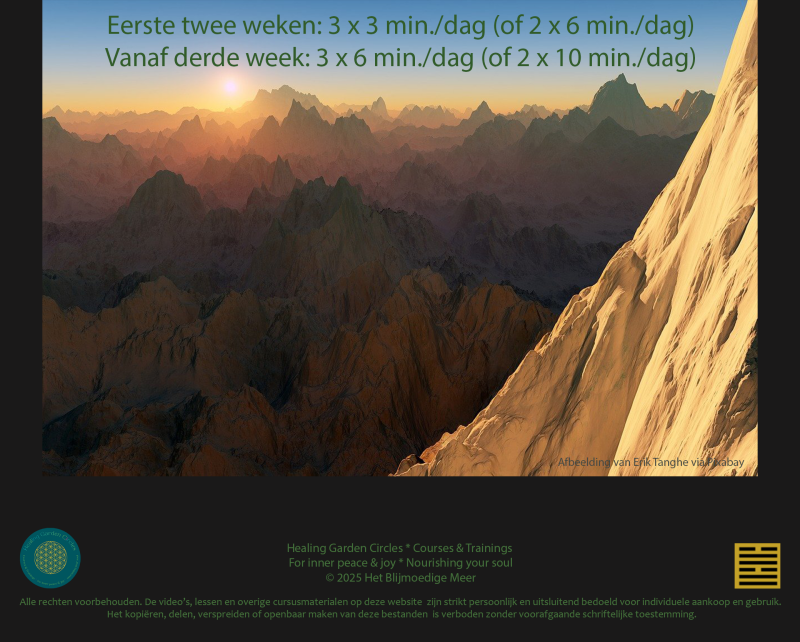
For the first two weeks, practice 3 times a day for 3 minutes each session.
Starting in week three, practice 3 times a day for 6 minutes each session.
After each breathing session, cortisol levels decrease and remain lower for approximately six hours. That's why it's more effective to spread the exercises throughout the day rather than doing them all in the morning or evening—or practicing only once a day.
For many people, however, practicing three times a day can be challenging. If that's the case, it's better to practice twice a day than to stop altogether.
For the first two weeks, practice 2 sessions of 6 minutes each day. Starting in week three, increase to 2 sessions of 10 minutes each day.
You don't need to wait exactly six hours between sessions. For example, you could practice once when you wake up, once just before going to bed, and once sometime during the day, such as in the early or late afternoon.
These are minimum recommendations. If you'd like, you can always increase both the length and the number of your daily practice sessions.
Try to practice every day for at least 6 to 8 weeks to help lower your body's stress level over the long term. After that, continue practicing to maintain those benefits and help keep your stress level low as a preventive measure.
After one year, you can switch to a maintenance routine of one 10-minute session per day.
Lesson 2 - Breathing Rhythm
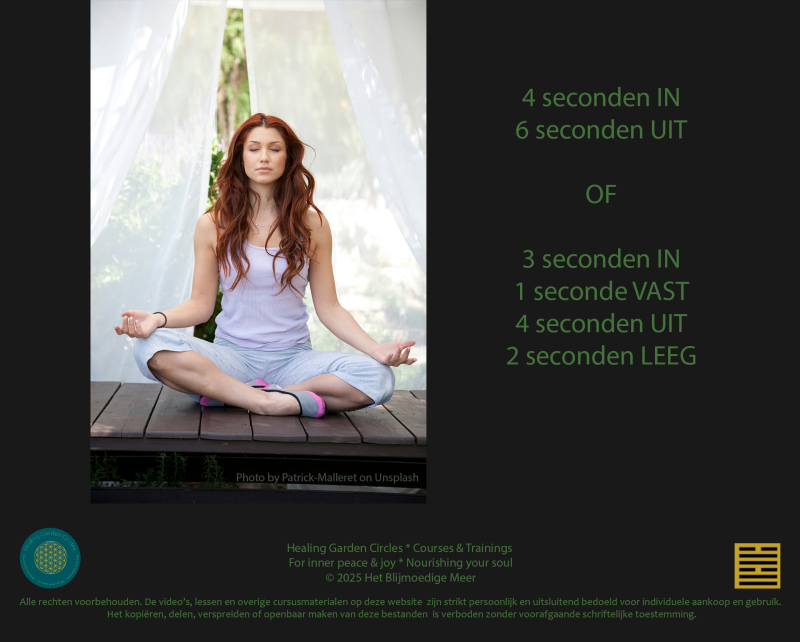
For most people, a breathing rhythm of 4 seconds in and 6 seconds out feels comfortable. If you prefer breathing with pauses, you can try inhale for 3 seconds, hold your breath for 1 second, exhale for 4 seconds, and pause for 2 seconds before your next inhale.
It may feel a little unusual at first, but after practicing a few times, it should begin to feel comfortable. If it still doesn't, it's best to choose a rhythm that feels more natural for you—for example, 7 breaths per minute instead of 6. You can easily adjust this in the settings of your breathing pacer app.
Using a breathing pacer is recommended because if you have to count the timing yourself, it's much harder to fully relax, and your cortisol (the body's primary stress hormone) may start to rise again.
Lesson 3 - Using a Breathing Pacer App
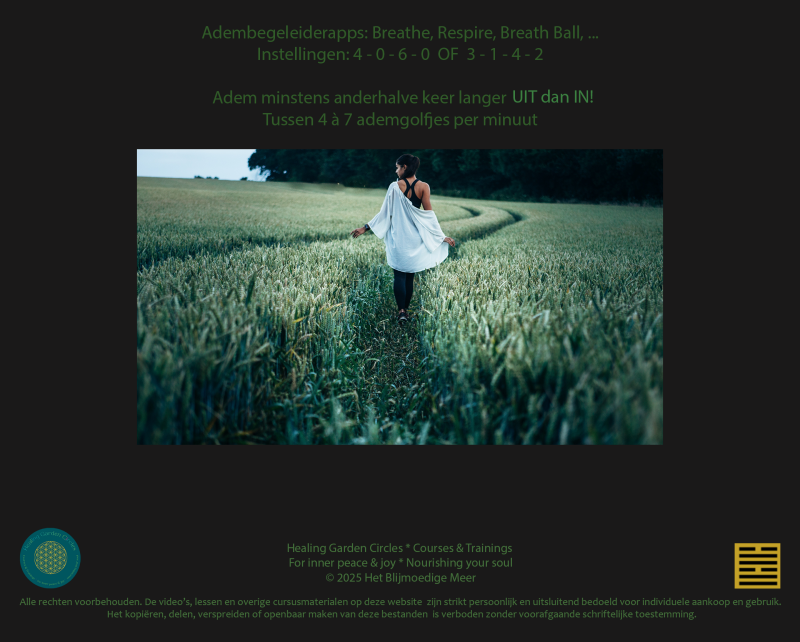
There are many free breathing pacer apps you can download. For example, you can use apps such as Breathe, Respire, or Breath Ball and create your own custom breathing pattern.
Be sure to choose a breathing pacer app that lets you create your own breathing rhythm rather than requiring you to use only pre-programmed patterns. Not every breathing rhythm will activate the brake of the autonomic nervous system.
The most important rule is that your exhale should last at least one and a half times longer than your inhale.
If you can comfortably extend your exhale beyond the recommended patterns of 3-1-4-2 (inhale for 3 seconds, hold for 1 second, exhale for 4 seconds, pause for 2 seconds) or 4-0-6-0 (inhale for 4 seconds, exhale for 6 seconds), you can certainly do so. For example, you might choose 3-1-6-2 or 4-0-8-0.
Only do this if it feels comfortable, and never force your breathing. If you strain or push yourself, you'll activate the accelerator rather than the brake.
Also, make sure that one complete breathing cycle—one inhale and one exhale, including any pauses before or after each breath—doesn't last longer than 15 seconds. As long as your breathing rate stays between 4 and 7 breaths per minute, you'll remain within the autonomic nervous system's balance zone.
If your breathing slows to fewer than 4 breaths per minute, your brain may interpret this as a potential lack of oxygen, causing the accelerator to become active again.
Customize the app's settings so your practice feels as relaxing as possible. For example, you can choose whether you'd like a voice to guide the timing, add calming nature sounds in the background, or adjust other settings to suit your preferences.
Most breathing pacer apps also let you enable audio cues for inhaling and exhaling, so you don't have to look at the screen. If you prefer, you can lie down, close your eyes, and simply follow the sound cues throughout the exercise.
Lesson 4 - Important Tips

Inhale through your nose and exhale through either your nose or your mouth—whichever feels most comfortable to you. As you breathe, use diaphragmatic (belly) breathing.
If you're not yet familiar with belly breathing, the easiest way to learn is to lie comfortably on your back with your hands resting on your abdomen. As you inhale through your nose, imagine filling a balloon in your belly with air. As the balloon expands, your hands will naturally rise. As you exhale, your hands will gently fall again.
Be patient as you learn belly breathing. It can feel unfamiliar at first and may take some time to master. Simply do the exercises as well as you can in the moment, even if it doesn't feel perfect right away. With regular practice, it will become easier and more natural. Never force your breathing, as that will activate the accelerator instead of the brake.
If thoughts arise during the exercise, simply notice them and let them drift by like clouds in the sky. Then gently and without judgment bring your attention back to your breathing. Try not to focus on your to-do list or everything you still need to get done, as this can have the opposite effect and reactivate the accelerator. If you notice your mind wandering, simply return your attention to your breath with kindness and without judgment.
You may also notice emotions coming to the surface. This is a normal part of conscious breathing. Allow the emotions to be there, knowing that they, too, will pass.
At first, you may feel a little lightheaded. This usually means you're breathing in too much air, rather than breathing too quickly. Try taking smaller, gentler breaths—almost as if you were inhaling through a straw with your nose—and continue making your exhale longer than your inhale, as you've already set up in your breathing pacer app. The lightheaded feeling should pass quickly. Aim for slow, steady breathing with a comfortable, consistent volume of air rather than deep or forceful breaths.
Yawning is also completely normal. Your body is adjusting to this slower breathing pattern, and yawning is one way it naturally compensates by taking in a little more air.
Finally, it's possible that some symptoms—such as a faster heart rate—may temporarily feel more noticeable when you first begin practicing. This is normal and usually passes with continued practice. At first, your body may respond with a stress reaction because it isn't used to slowing down. As you continue practicing regularly, however, your nervous system typically adapts to the slower breathing rhythm, and these symptoms gradually fade on their own.
Lesson 5 - Research Findings
The minimum practice times recommended here are based on the protocol developed and studied by Louis Van Nieuland, a pioneer in Cardiac Coherence in Belgium. He evaluated this approach in people experiencing physical complaints, stress-related conditions, depression, and anxiety.
After six weeks of consistent daily practice, participants experienced a reduction of more than half of their symptoms. Among those who continued practicing consistently in the weeks and months that followed, symptoms improved even further—by approximately 80% in people with depression and 90% in people with anxiety.
With ongoing practice, it's possible for stress-related symptoms and conditions to continue improving—and in some cases even disappear or be prevented altogether—as the autonomic nervous system returns to a healthier state of balance.
Some systems regulated by the autonomic nervous system respond relatively quickly, such as the sleep-wake cycle, while others, like the digestive system, may take longer to improve.
For those who would like to learn more, Louis Van Nieuland and Katrien Geeraerts co-authored the book Blijven ademen ("Keep Breathing"), which explores Cardiac Coherence breathing exercises in greater depth.
Lesson 6 - Daily Practice Leads to Lasting Success!